Sep.2026 03
มุมมอง: 173
NiMH vs NiCd: Why Nickel-Metal Hydride Replaced Nickel-Cadmium — A Technical Comparison
การแนะนำ
Both chemistries share the nickel positive electrode and a 1.2 V nominal cell, yet differ at the negative electrode. We compare energy density, memory behaviour, high-rate performance, charging, cycle life and the regulatory phase-out of cadmium, with an OEM migration checklist.
รายละเอียด

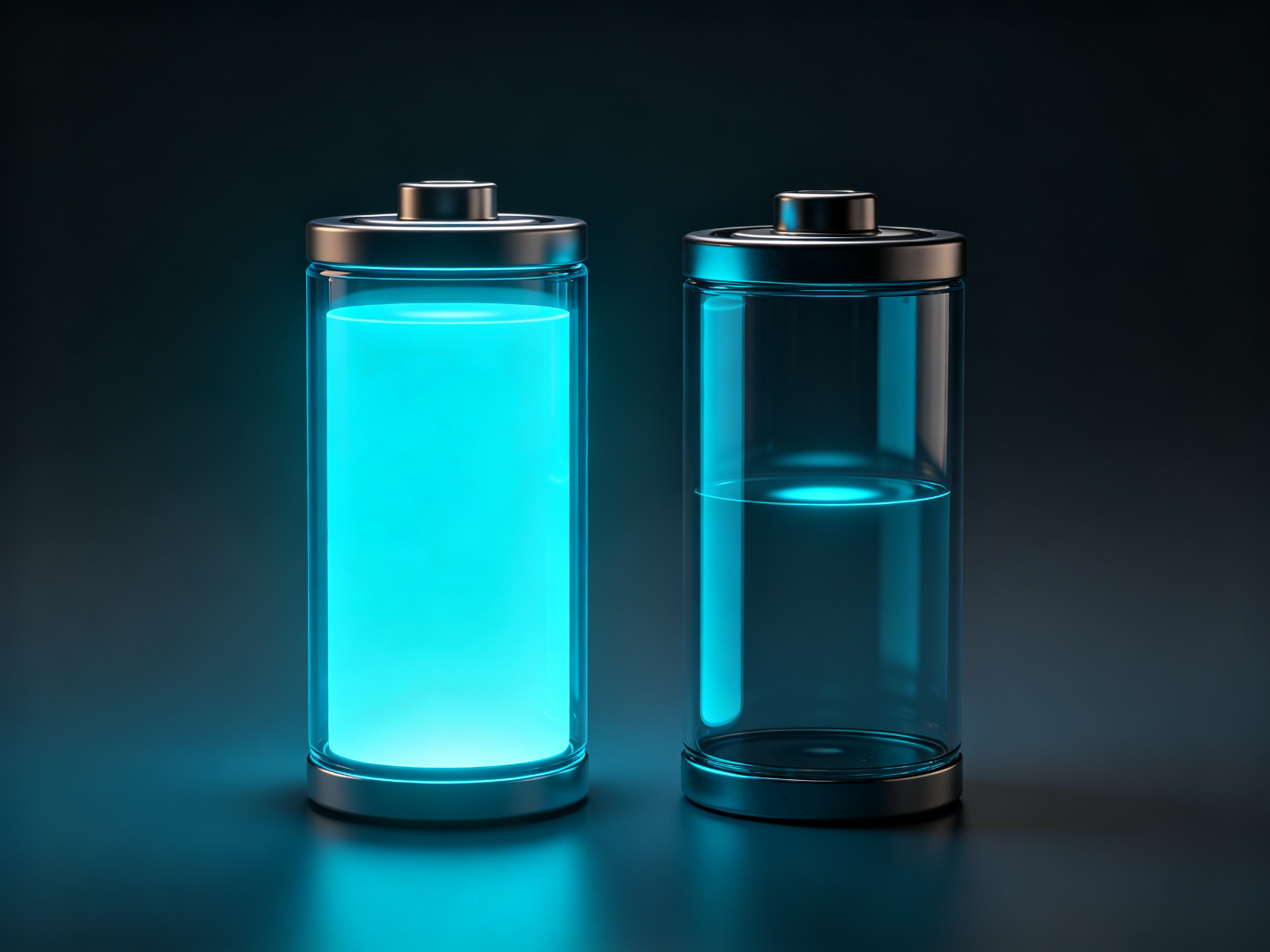
NiMH versus NiCd nickel cadmium battery technical comparison

Nickel-cadmium (NiCd) batteries once dominated cordless tools, emergency systems and portable electronics. Today, nickel-metal hydride (NiMH) has taken over nearly all of that territory, and the few remaining NiCd strongholds exist mainly because of legacy certifications or narrow regulatory exemptions. For an OEM choosing between the two — or replacing an ageing NiCd design — it helps to understand precisely what changed, what NiMH does better, and where the old chemistry still had genuine advantages. Both systems belong to the alkaline nickel family, share a nominal 1.2 V, and use the same nickel-hydroxide positive electrode; the entire difference begins at the negative electrode.

Same Family, Different Negative Electrode

The positive electrode in both chemistries cycles between Ni(OH)₂ and NiOOH in potassium-hydroxide electrolyte, which is why both deliver 1.2 V per cell and show the familiar flat discharge plateau. The negative electrode is where they diverge:

  • NiCd negative — cadmium / cadmium hydroxide. On discharge, Cd reacts with hydroxyl ions to form Cd(OH)₂; the reaction is simple, fast and mechanically rugged.
  • NiMH negative — a hydrogen-storage alloy (AB₅ mischmetal or AB₂ Laves phase) that absorbs and releases atomic hydrogen inside its crystal lattice; no heavy metal is dissolved or plated.

That single substitution drives almost every difference in capacity, weight, memory behaviour, toxicity and regulation that follows.

Energy Density: 1.5–2× More Runtime in the Same Can

Storing hydrogen in an alloy packs considerably more energy per gram and per millilitre than the cadmium reaction. Typical industry ranges are roughly 60–120 Wh/kg gravimetric and 140–300 Wh/L volumetric for NiMH, versus roughly 40–60 Wh/kg (up to about 80 Wh/kg in premium designs) and 50–150 Wh/L for NiCd.

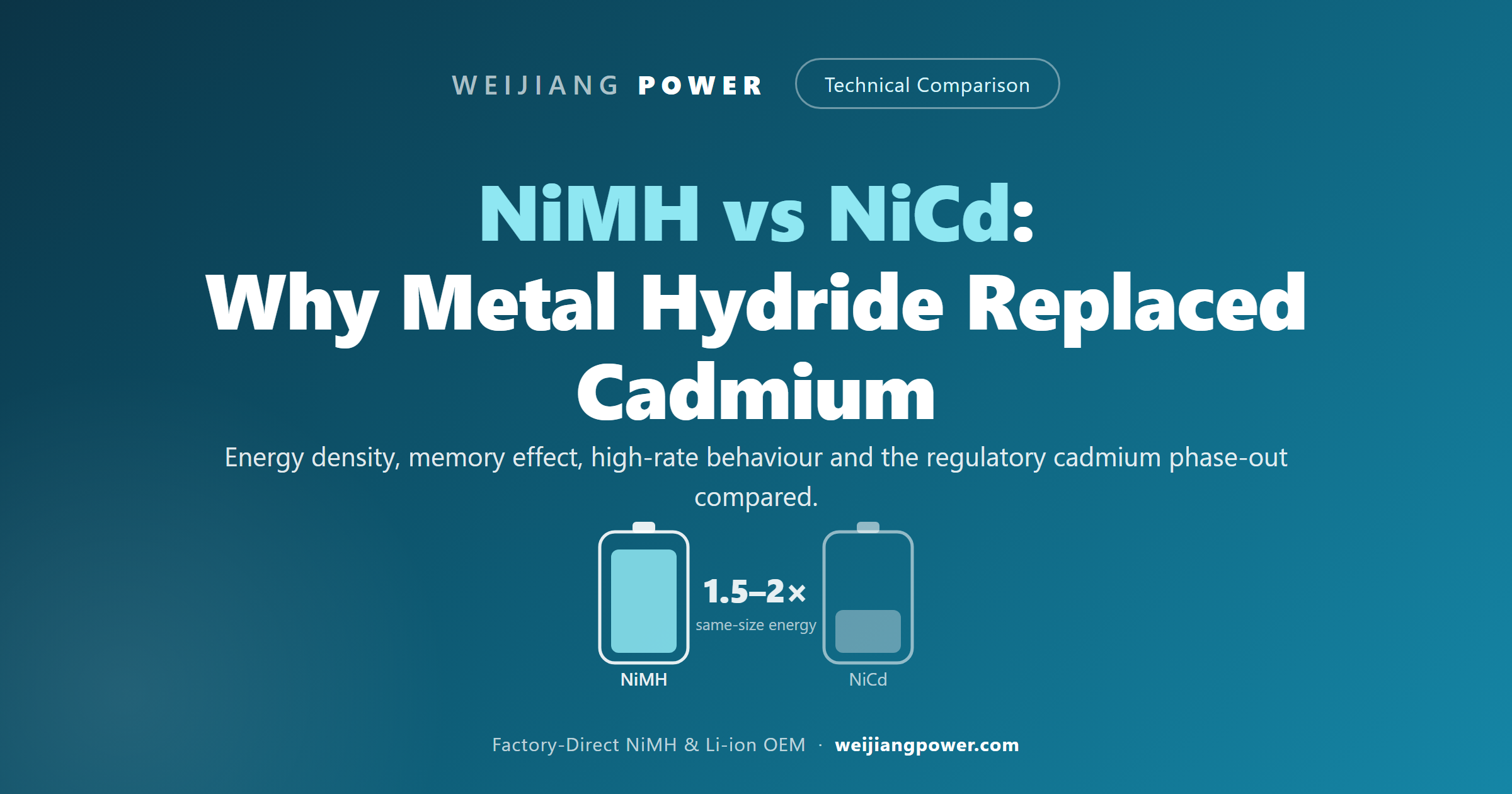
In a standard AA or Sub-C envelope this translates into roughly 1.5 to 2 times the usable capacity: a classic 600–700 mAh AA NiCd was replaced by 1,300–2,700 mAh NiMH cells in the identical size. For device makers, the migration usually means either longer runtime with the same battery bay, or the same runtime in a smaller, lighter bay — a decisive advantage in handheld and consumer products.

NiMH delivers higher capacity than NiCd in the same cell size illustration

Memory Effect: A Real NiCd Phenomenon, A Milder NiMH One

NiCd's famous "memory effect" has a physical basis. Repeated shallow cycling — charging after only partial discharge — can cause the cadmium electrode to grow large, ordered crystals that effectively "remember" the shallow capacity window, raising internal resistance and shrinking delivered runtime until a controlled deep discharge restores it.

NiMH is not entirely immune — repeated shallow cycling can cause a mild voltage depression — but it does not form the same stubborn cadmium crystal structure, and the effect is smaller, slower and usually corrected by a couple of normal full cycles. Modern low-self-discharge NiMH cells show even less sensitivity. In practical products this removes the user-facing "conditioning ritual" that NiCd devices required.

Where NiCd Was Genuinely Strong

An honest comparison concedes real NiCd strengths, several of which matter in harsh-duty niches:

  • Extreme ruggedness and cycle endurance — NiCd tolerates deep cycling, rough handling and repeated abuse, often reaching 1,000+ cycles under punishing regimes where consumer-grade NiMH might reach 500–800.
  • Outstanding high-rate and low-temperature behaviour — the fast cadmium reaction supports very high discharge currents and strong voltage retention below −20 °C.
  • Very low standby self-discharge and long, forgiving shelf storage.
  • Simple, robust charging with clear −ΔV detection and tolerance of basic chargers.

Modern high-rate NiMH cells — engineered foamed electrodes, thin electrodes and low-resistance separators — now close most of the power gap, routinely delivering 5C–10C bursts for cordless tools, while wide-temperature and low-self-discharge (LSD) formulations address the cold-storage and shelf-life arguments. NiMH's remaining weakness versus NiCd is mostly in the most extreme combination of deep cycling, vibration and sub-zero cold simultaneously — precisely the niche where legacy NiCd designs persist.

Charging and Drop-In Compatibility

Because both chemistries are 1.2 V nickel systems with −ΔV end-of-charge signatures, most nickel-based chargers and pack form factors are mechanically compatible. Two cautions matter for a clean migration:

  • NiMH generates recombination heat faster near full charge and is more heat-sensitive than NiCd, so charge algorithms should use −ΔV plus ΔT/Δt temperature-slope termination and a backup timer rather than relying on a simple timer.
  • Trickle current should be lower for NiMH (typically C/20 or below for continuous maintenance) to avoid sustained heating that accelerates aging.

The Regulatory Side: Why Cadmium Was Phased Out

Cadmium is a classified toxic heavy metal and a proven environmental hazard, and legislation — not just performance — drove the transition:

  • EU Battery Directive 2006/66/EC prohibited portable batteries containing more than 0.002 % cadmium by weight, with a temporary exemption for cordless power tools that expired at the end of 2016 (ban applicable from 1 January 2017). Only narrow exemptions remain, principally medical devices and emergency/alarm systems.
  • RoHS (2011/65/EU) restricts cadmium in electronic equipment to 0.01 % by weight with limited exemptions, complicating NiCd use in CE-marked products.
  • The newer EU Battery Regulation (EU) 2023/1542 tightens documentation, recycled-content reporting, collection and due-diligence duties across the whole battery value chain.
  • Similar restrictions exist across many other markets, and NiCd waste streams require controlled hazardous-waste handling.

NiMH contains no cadmium or lead; its nickel, cobalt, steel and even the rare-earth elements in the alloy are mechanically and hydrometallurgically recyclable, which aligns products with the circular-economy requirements increasingly demanded by retailers and public procurement.

OEM Migration Checklist: Replacing a NiCd Design

  • Reuse the form factor — same 1.2 V cell voltage and standard sizes (AA, AAA, Sub-C, C, D and button cells) make mechanical replacement straightforward.
  • Re-rate capacity and runtime using modern NiMH capacity grades — most designs gain runtime immediately.
  • Upgrade the charger profile to −ΔV + ΔT/Δt + timer control with a low trickle floor.
  • Re-check high-rate and cold-temperature requirements against high-rate or wide-temperature NiMH grades rather than consumer cells.
  • Refresh compliance documentation — RoHS, REACH, the EU Battery Regulation, transport and recycling paperwork all become simpler without cadmium.
  • Validate end-device cutoffs around the NiMH discharge curve (1.0 V/cell cutoff convention) rather than legacy NiCd thresholds.

A Transition That Is Now Complete for Most Applications

NiCd survives only where a safety-certified legacy system cannot be re-certified, or in the harshest combination of extreme cold, vibration and ultra-deep cycling. For consumer devices, cordless tools, lighting, medical-adjacent equipment, solar storage and industrial packs, NiMH delivers 1.5–2× the energy in the same space, far less memory behaviour, no cadmium liability and a cleaner path through global environmental regulation — which is why the industry's migration is effectively complete.

Weijiang Power: Your NiMH Migration Partner

Weijiang Power manufactures a full range of NiMH cells and custom packs — consumer and high-rate grades, wide-temperature and LSD formulations, welded Sub-C packs, tabbed cells and drop-in replacements for legacy NiCd form factors. Our engineering team supports OEM migration with matched cell grading, charger-profile guidance and complete compliance documentation (RoHS, REACH, CE-supporting files and transport evidence). Share your legacy NiCd specification or device requirements, and we will propose a modern NiMH design that upgrades runtime and regulatory standing together.

Lastest News
Unlock the power of lithium batteries for lasting performance in handheld vacuum cleaners. Weijiang Li-on Battery leads the charge in innovation.
อ่านเพิ่มเติม
A NiMH battery pack is a collection of individual NiMH batteries connected in series or parallel to create a higher voltage or capacity battery.
อ่านเพิ่มเติม
REQUEST MORE DETAILS
Please fill out the form below and click the button to request more information about
Name*
Whatsapp/Phone
Email*
Message*
Professional battery factory, support OEM & ODM customization.
REQUEST MORE DETAILS
Please fill out the form below and click the button to request more information about
Company Name*
Email Address*
WhatsApp / Phone*
Message & Requirements*