เหตุใด NiMH จึงขับไฟโซลาร์และอุปกรณ์เก็บเกี่ยวพลังงาน: ทนชาร์จแบบหยด งบประมาณพลังงานตั้งแต่พลบค่ำถึงรุ่งอรุณ ทนกลางแจ้งและพลังงานสำรอง LSD
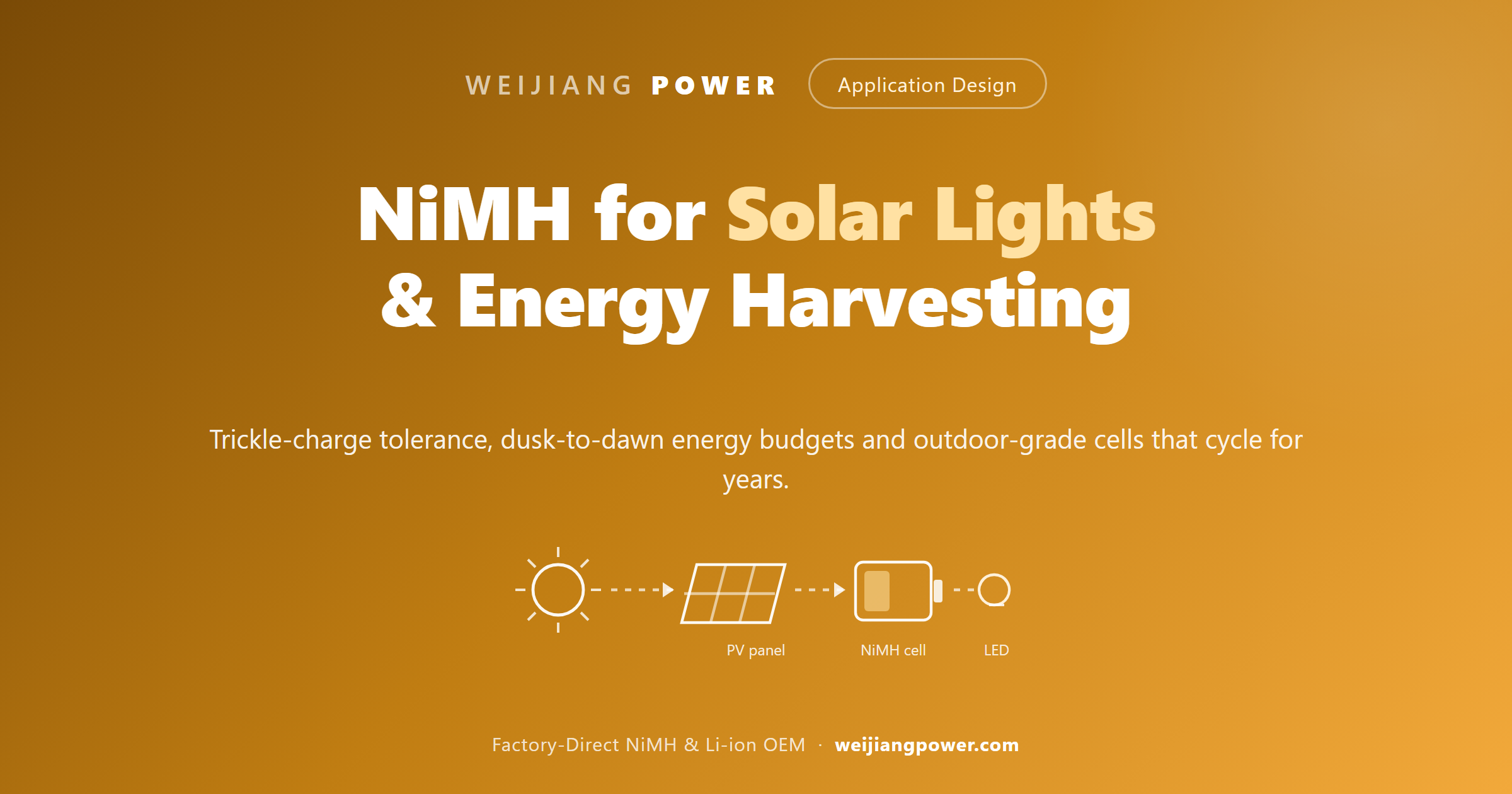
ไฟโซลาร์สวน ไฟเครื่องหมายทางเดิน เซนเซอร์โซลาร์ และอุปกรณ์เก็บเกี่ยวพลังงานขนาดเล็กหลายล้านชิ้น พึ่งพาเซลล์ชาร์จได้จิ๋วที่ทำงานทุกคืนยาวนานหลายปีโดยไม่ต้องบำรุงรักษา เซลล์นั้นเกือบจะเป็นนิกเกิล-เมทัลไฮไดรด์เสมอ นี่คืองานที่ท้าทาย: แบตเตอรี่ต้องรับประจุใดก็ตามที่แผงขนาดเล็กป้อนให้ในวันหนาวสั้น ๆ ทนฝนและน้ำค้าง คายประจุได้อย่างน่าเชื่อถือหลังฟ้ามืด และทำวัฏจักรซ้ำมากกว่าหนึ่งพันครั้ง บทความนี้อธิบายว่าเหตุใด NiMH จึงครองการออกแบบไฟโซลาร์และการเก็บเกี่ยวพลังงาน และจะเลือกขนาดเซลล์กับแผงอย่างไรเพื่อการทำงานตั้งแต่พลบค่ำถึงรุ่งอรุณที่วางใจได้
วัฏจักรพลังงานประจำวัน
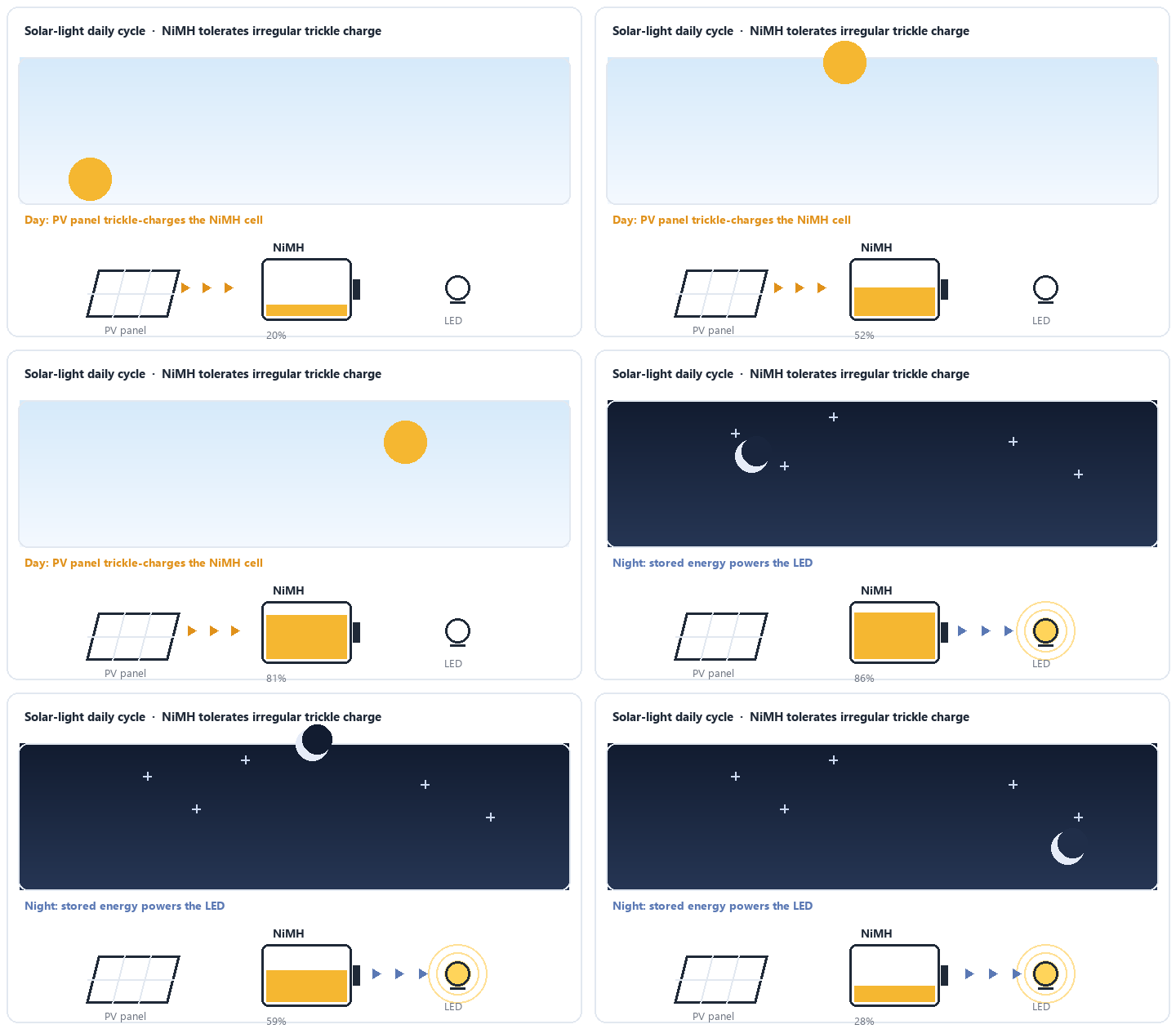
ไฟโซลาร์ทำวัฏจักรง่าย ๆ ซ้ำไปเรื่อยไม่สิ้นสุด ซึ่งกำหนดทุกการตัดสินใจออกแบบ:
- เก็บเกี่ยวกลางวัน — แผงโฟโตวอลเทอิกขนาดเล็กเปลี่ยนแสงแดดเป็นกระแสชาร์จแบบหยดเล็กน้อย โดยทั่วไปหลายสิบถึงไม่กี่ร้อยมิลลิแอมป์ แล้วชาร์จเซลล์โดยตรงหรือผ่านคอนโทรลเลอร์แบบง่าย
- สลับตอนพลบค่ำ — เมื่อแรงดันแผงลดฮวบตอนพระอาทิตย์ตก คอนโทรลเลอร์ปลุกไดรเวอร์ LED และเริ่มคายประจุเซลล์
- จ่ายพลังงานกลางคืน — LED ดึงกระแสขนาดเล็กที่ค่อนข้างคงที่เป็นเวลา 6–12 ชั่วโมง จนรุ่งอรุณเริ่มวัฏจักรใหม่
ต่างจากแบตเตอรี่โทรศัพท์ที่ได้รับการชาร์จเต็มแบบควบคุมทุกครั้ง อินพุตชาร์จของเซลล์โซลาร์เปลี่ยนทุกวันตามสภาพอากาศ ฤดูกาลและร่มเงา ดังนั้นเคมีต้องให้อภัยการชาร์จที่ไม่สม่ำเสมอและชาร์จไม่เต็ม
เหตุใด NiMH จึงเหมาะกว่าทางเลือกอื่น
- ทนกระแสหยดและการชาร์จเกิน — วัฏจักรรวมตัวออกซิเจนภายในดูดซับกระแสชาร์จส่วนเกินเล็กน้อยได้อย่างปลอดภัย แผงจึงป้อนเซลล์โดยตรงในช่วงกลางวันได้โดยไม่ต้องใช้ไอซีชาร์จซับซ้อน ส่วนลิเธียมต้องควบคุมแรงดันแม่นยำซึ่งเพิ่มต้นทุนให้สินค้าราคาประหยัด
- อายุการใช้งานในสถานะชาร์จบางส่วน — NiMH โดดเด่นในการใช้รอบตื้นและไม่สม่ำเสมอของงานโซลาร์ แทนที่จะต้องมีวินัยชาร์จ/คายประจุเต็ม
- เข้ากันได้กับ 1,2 โวลต์ — เซลล์ NiMH เซลล์เดียวขับวงจร LED ง่าย ๆ และวงจรโจรจูลหรือไดรเวอร์บูสต์เล็กได้อย่างมีประสิทธิภาพ สอดคล้องกับสถาปัตยกรรมเซลล์ปฐมภูมิ 1,5 โวลต์เดิมที่ผลิตภัณฑ์เหล่านี้พัฒนามา
- ปลอดภัยกลางแจ้ง — อิเล็กโทรไลต์น้ำที่ไม่ติดไฟทนอยู่ในกล่องปิดผนึกที่ร้อนได้อย่างปลอดภัย และต่างจากถ่านอัลคาไลน์ปฐมภูมิ NiMH คุณภาพดีไม่รั่วกัดกร่อนหลังใช้กลางแจ้งนาน
- เศรษฐกิจและกฎข้อบังคับแบบชาร์จได้ — ไม่มีแคดเมียม (ต่างจาก NiCd รุ่นเก่า) สอดคล้องกฎแบตเตอรี่ทั่วโลก และใช้ซ้ำได้หลายปีแทนที่จะทิ้งทุกสัปดาห์
เลือกขนาดเซลล์ แผง และ LED เป็นระบบเดียว
เวลาทำงานที่วางใจได้เป็นปัญหางบประมาณพลังงาน ไม่ใช่ปัญหายี่ห้อแบตเตอรี่ ให้คำนวณย้อนจากภาระกลางคืน:
- คำนวณความต้องการกลางคืน — กระแส LED × ชั่วโมงที่มืด ÷ ประสิทธิภาพไดรเวอร์ LED 30 mA ทำงาน 8 ชั่วโมงที่ประสิทธิภาพ ~85 % ต้องการประจุใช้งานประมาณ 280 mAh
- ลดค่าตามความเป็นจริง — ออกแบบสำหรับเดือนที่สั้นและมีเมฆมากที่สุด ไม่ใช่กลางฤดูร้อน กฎทั่วไปกำหนดความจุเซลล์ไว้ที่ 1,5–2 เท่าของความต้องการกลางคืนเฉลี่ย เพื่อไม่ให้วันเมฆทำให้เซลล์หมด
- จับคู่กระแสแผงกับชั่วโมงแสง — เอาต์พุตแผง × ชั่วโมงชาร์จจริงต้องมากกว่าความต้องการกลางคืน แผงเล็กเกินไปทำให้เซลล์ขาดพลังงานเรื้อรัง ซึ่งเป็นสาเหตุอันดับหนึ่งที่ไฟโซลาร์หรี่ลงหลังผ่านไปไม่กี่เดือน
- เลือกเกรดความจุที่ถูกต้อง — ไฟขนาดเล็กใช้เซลล์ AAA/AA 300–600 mAh; งานที่สว่างกว่าหรือใช้นานกว่าเลื่อนเป็น AA NiMH 800–1 300 mAh โดยมีเกรดความจุสูงสำหรับสินค้าพรีเมียม
เอาตัวรอดในสภาพแวดล้อมกลางแจ้ง
เซลล์โซลาร์อยู่ในกล่องไม่ระบายอากาศที่อุณหภูมิแกว่งตั้งแต่ต่ำกว่าจุดเยือกแข็งไปจนเกิน 60 °C ใต้แสงแดดโดยตรง ช่วงทำงานกว้างของ NiMH รับมือได้ แต่รายละเอียดการออกแบบเป็นตัวกำหนดอายุงาน: ผนึกช่องกันความชื้นขณะปล่อยให้วาล์วเซลล์ทำงาน ใช้เกรดอุณหภูมิกว้างสำหรับภูมิอากาศที่มีน้ำค้างแข็งรุนแรง และเลือกเซลล์ความต้านทานภายในต่ำ เพื่อให้แรงดันคืนหนาวยังเปิดไดรเวอร์ LED ได้
การคายประจุเองต่ำ: ความลงตัวตามธรรมชาติ
เคมี NiMH คายประจุเองต่ำ (LSD) ยุคใหม่เก็บประจุส่วนใหญ่ไว้ได้นานหลายเดือน สิ่งนี้สำคัญในผลิตภัณฑ์โซลาร์: หลังจากวันมืดและฝนต่อเนื่อง เซลล์ LSD ยังเก็บพลังงานสำรองพอที่จะสว่างเมื่อแดดกลับมา ขณะที่เซลล์ทั่วไปเสียพลังงานกันชนไป เมื่อรวมกับอายุรอบที่กำหนด 500–1 000 รอบเต็มขึ้นไป (รอบประจำวันตื้น ๆ จะมากกว่านั้นอีกมาก) เซลล์ NiMH ที่เลือกมาดีจะให้งานหลายฤดูกาล
ความเสียหายที่พบบ่อยหน้างาน — และวิธีป้องกัน
- ชาร์จไม่พอเรื้อรังจากแผงเล็กหรือถูกร่ม: เลือกขนาดตามแสงแดดของเดือนที่แย่ที่สุดและรักษาแผงให้สะอาดในบรีฟ
- คายประจุลึกเกินหลังช่วงมืดยาว: เพิ่มการตัดแรงดันต่ำในคอนโทรลเลอร์สำหรับสินค้าพรีเมียม
- เซลล์ถูกความต้านทานสูงราคาถูกเปิดไดรเวอร์ไม่ได้ตอนหนาว: ระบุ NiMH ที่คัดเกรดแล้ว Rᵢ ต่ำจากสายการผลิตที่ควบคุมคุณภาพ
- การกัดกร่อนและหน้าสัมผัสเสีย: ใช้สปริงชุบนิกเกิลและช่องปิดผนึก
Weijiang Power: NiMH ที่สร้างมาเพื่อหลายพันคืน
Weijiang Power จัดหาเซลล์ AA, AAA และ NiMH สั่งทำที่จับคู่ตามวัตถุประสงค์ของงานไฟโซลาร์และการเก็บเกี่ยวพลังงาน รวมถึงเซลล์ AA โซลาร์ 1 300 mAh สูตร LSD และตัวเลือกมีแถบหรือแบบบัดกรีสำหรับประกอบอัตโนมัติ ทุกเซลล์ผ่านการทดสอบฟอร์เมชันและคัดเกรดตามความสม่ำเสมอของความจุและความต้านทานภายใน เพื่อให้ไฟของคุณส่องสว่างต่อเนื่องตลอดหนาว ส่งภาระ LED สเปกแผงและเวลาทำงานเป้าหมายมาให้เรา วิศวกรจะคำนวณงบประมาณพลังงานเซลล์-แผงทั้งหมดร่วมกับคุณ
ซีรีส์ · เจาะลึกวิศวกรรม NiMH
บทความที่เกี่ยวข้อง


